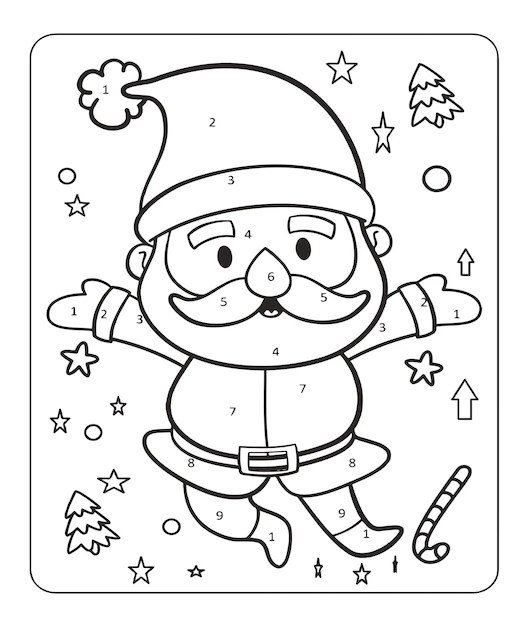
The holiday season twinkles with magic, imagination, and the joy of shared moments. For children, this magic often comes alive through art – the vibrant splash of a crayon, the careful line of a marker, or the satisfying click of a digital paint bucket. Yet, finding truly "easy" Christmas drawings for kids that are engaging, stress-free, and creatively fulfilling can sometimes be a challenge for parents and educators. You want designs that empower young artists, not frustrate them with intricate details.
This comprehensive guide cuts through the clutter, offering practical advice and creative inspiration to make holiday drawing and coloring an absolute delight for every child. We'll explore simplified festive designs, step-by-step coloring techniques, engaging activities, and even educational challenges that transform art time into playful learning. Get ready to turn simple lines into unforgettable Christmas memories.
At a Glance: Your Guide to Festive Fun
- Simplified Joy: Discover designs tailored for young hands, featuring bold lines and clear shapes perfect for building confidence.
- Coloring Confidence: Learn a step-by-step method for both traditional and digital coloring, focusing on foundational skills.
- Engaging Activities: Transform drawings into postcards, garlands, gift tags, and more with easy, time-efficient projects.
- Creative Palettes: Explore classic and wintry color schemes, plus quick tricks for adding sparkle and depth.
- Learning Through Play: Turn coloring sessions into fun lessons on counting, patterns, spatial awareness, and memory.
- Essential Toolkit: Get recommendations for materials that enhance the artistic experience without breaking the bank.
- Displaying Masterpieces: Learn how to create a "Christmas Corner" to celebrate and preserve your child's holiday art.
The Magic of Simple Christmas Art for Kids: Why "Easy" is Everything
When it comes to engaging children with art, "easy" doesn't mean less creative; it means more accessible. For young artists, especially those just developing their fine motor skills, complex designs can quickly become overwhelming. Our focus here is on Dibujos Navideños Fáciles para Niños – easy Christmas drawings for kids – specifically crafted to foster joy and confidence, not frustration.
What truly defines an "easy" Christmas drawing? It's all about simplicity in design and execution. These are outlines with clear, closed borders, thick lines that are forgiving to small hands, and minimal background clutter. Think of it as a friendly invitation to creativity, where the focus is squarely on the character or object being colored, allowing children to experiment with color and form without getting lost in overwhelming detail.
What Makes a Drawing Truly Kid-Friendly?
The ideal easy Christmas drawing avoids common pitfalls of more intricate illustrations. You won't find bustling cityscapes, multi-story buildings, detailed landscapes, or scenes crowded with numerous characters and elaborate decorations in this category. These elements, while beautiful, are better suited for other drawing categories focused on specific themes like "Christmas Animals," "Nativity Scenes," or "Santa Claus and Family."
Instead, easy Christmas drawings often feature:
- Isolated Subjects: A single nutcracker, a child singing a carol, a cozy fireplace, a festive train, or a charming gingerbread cookie.
- Geometric Simplicity: Mandalas, snowflakes with thick, bold lines, or simple gift tags with a clean frame.
- Clear Boundaries: Every shape is a closed loop, essential for both traditional coloring (preventing color from bleeding out) and digital tools like the fill bucket (ensuring colors stay within their intended zones).
These simplified designs provide the perfect canvas for young imaginations. They're ideal for printing and coloring with traditional tools like pencils and crayons, or for digital coloring with online tools, ensuring every child can experience the satisfaction of completing their festive masterpiece.
Mastering the Brush (or Crayon!): A Step-by-Step Coloring Guide
Learning to color effectively is a foundational art skill that builds confidence and coordination. Whether your child prefers the tactile feel of crayons or the precision of a digital fill tool, these steps will guide them toward creating polished and vibrant holiday artwork.
How to Color Like a Pro (Little Pro, that is!)
- Choose Your Core Colors: Start simple! Select 3 primary colors that will dominate the drawing. Think classic holiday hues like red, green, and gold (or yellow), or a wintry palette like light blue, pale pink, and silver (or grey). This limitation helps children focus and creates a cohesive look.
- Fill the Big Shapes First: Begin with the largest, most prominent areas – Santa hats, presents, or stockings. This approach builds confidence quickly, as children see significant progress right away. It also helps establish the main color scheme before moving to smaller details.
- Add Little Sparkle and Shine: To make elements pop, teach them to leave small white dots or squares in strategic spots. This trick works wonders on pom-poms, bows, bells, or even shiny ornaments, mimicking light reflection and adding a touch of magic.
- Introduce Soft Volume: For a slightly more advanced touch, suggest adding a light, subtle shadow. A pale grey pencil or crayon can be used to lightly shade one side of an object, or just under the brim of a hat, giving the drawing a sense of three-dimensionality. This is a gentle introduction to perspective and light.
- Unify with Repeated Colors: Encourage them to use the same primary colors across different elements. For example, if red is used for a hat, suggest using it again for a bow on a gift or a small ornament. This repetition ties the whole drawing together, making it look deliberate and neat.
- Minimalist Backgrounds: Keep the background simple to ensure the main character or object remains the star. A few large snowflakes, a light blue wash, or a thin colored frame is often all you need. Overly detailed backgrounds can distract and overwhelm the main subject.
- Outline for Definition (Optional): If lines aren't crisp enough or if the child has colored outside the lines a bit, a fine-tip marker can be used at the very end to retrace the borders. Remind them to use a light hand to avoid pressing too hard.
- Sign Your Work! Encourage your child to sign their artwork with their initials and the date. This is a fantastic creative habit that instills a sense of ownership and pride in their work.
Mastering the Digital Fill Bucket
If using an online coloring tool or software, the "fill bucket" (or "paint can") tool is incredibly efficient:
- Click to Fill: Simply click inside each closed area to instantly fill it with the selected color.
- The Escape Hatch: If the color "escapes" and fills the entire canvas (or an unintended area), it means there's a tiny gap in the outline. Use the "undo" button, then carefully retrace or thicken the outline to close the gap, and try filling again. This teaches precision and problem-solving.
Unleashing Creativity: Engaging Christmas Drawing Activities for Home and Classroom
Easy Christmas drawings are more than just coloring pages; they're springboards for creativity and engaging hands-on projects. Here are several simple, fun activities that transform colored drawings into tangible holiday decorations and gifts, perfect for both home and classroom settings.
Quick and Easy Holiday Crafts
- Express Postcard (10–15 min):
- Color a favorite Christmas motif.
- Carefully cut it out.
- Glue it onto a folded piece of cardstock.
- Write a heartfelt holiday message inside. Voila! An instant, personalized greeting card.
- Door Garland (20 min):
- Color four small Christmas motifs.
- Use a hole punch to create a small hole at the top of each.
- Thread a piece of yarn or string through the holes to connect them.
- Hang your festive garland on a door, window, or wall.
- Gift Tags (15 min):
- Print multiple mini versions of easy drawings on a single sheet.
- Color them in.
- Cut them out.
- Punch a hole at the top to attach to gifts with ribbon or string. These add a personal, handmade touch to any present.
- Hanging Mobile (25–30 min):
- Color two identical figures.
- Place a piece of string or yarn between them.
- Glue the two figures together, aligning them perfectly.
- Allow to dry completely.
- Hang from a window or ceiling for a charming, swaying decoration.
- Christmas Bingo (15 min):
- Prepare nine different mini Christmas motifs (either colored or in outline).
- Print them onto a grid to create bingo cards.
- As you call out the names of the motifs, children mark them off with a dot of color. First to get three in a row wins!
- Countdown Calendar (20–30 min):
- Color five easy Christmas motifs.
- Glue them onto a sheet of paper numbered from 20 to 24 (or any desired countdown).
- Each day, your child can cross off a number as Christmas approaches, building anticipation.
These activities not only offer a fun artistic outlet but also help develop fine motor skills, sequencing abilities, and creative expression.
Painting with Joy: Recommended Christmas Color Palettes & Quick Tricks
Color is the heart of any drawing, especially during the festive season. Choosing the right palette can elevate a simple drawing into a vibrant masterpiece. Here are two recommended color schemes and some clever tricks to help your child achieve stunning results.
Recommended Color Palettes
- Classic Festive Joy:
- Colors: Rich Red, Forest Green, Golden Yellow (or Warm Gold)
- How to Use:
- Red: Perfect for Santa hats, bows, shiny ornaments, and wrapped gifts.
- Green: Ideal for wreaths, holly leaves, Christmas tree branches, or simple borders.
- Gold/Yellow: Use for stars, bells, candle flames, or tiny accents that need to shimmer.
- Achieving Balance: Aim to repeat red in 2-3 prominent areas, green in 1-2 areas, and gold as a smaller, sparkling accent. If true gold isn't available, a vibrant yellow works wonderfully; you can add a soft touch of light brown or orange for a subtle "ocre" shadow to give it depth.
- Sweet Winter Wonderland:
- Colors: Light Blue, Pale Pink, Silver (or Light Grey)
- How to Use:
- Light Blue: Great for scarves, winter skies, icy accents, or cool-toned frames.
- Pale Pink: Use for rosy cheeks on characters, small hearts, delicate bows, or subtle decorative elements.
- Silver/Grey: Excellent for creating shadows on ornaments, bells, or snowflakes, giving a frosty, elegant feel.
- Shine Trick: For an extra touch of sparkle, especially on round objects like tree ornaments or a hat's pom-pom, remember to leave tiny white dots or areas. This mimics light reflection, giving a glassy or soft, fuzzy texture.
- Optional Touch: A very soft lavender or light purple can be introduced for a tiny detail, adding a whisper of magic to the winter scene.
Quick Coloring Tricks for Polished Results
- The 3-2-1 Rule: For a clean, harmonious look, encourage using your main color in 3 distinct areas, your secondary color in 2 areas, and your accent color in just 1 small spot. This rule helps prevent drawings from looking too busy.
- The Forgiving Frame: If a child struggles to stay within the lines, suggest coloring a thin frame around the entire drawing using the secondary color. This small border can beautifully contain "escaped" colors, making the whole piece look tidier and intentional.
- Less is More: Remind children that they don't need dozens of colors. Often, just three well-chosen colors are enough to create a stunning piece of art. If they want to add a fourth, advise keeping its use very minimal, perhaps for a tiny detail or a small accent.
- Easy Brushes (or Erasers!): To create instant highlights or "shine," children can simply leave a small section uncolored. Alternatively, if they've colored over an area they wanted to highlight, a soft eraser can carefully lift some pigment to bring back the light.
- Digital Tools Need Clean Lines: If using a digital fill tool, reiterate the importance of closed, clean outlines without any gaps. The digital bucket needs clear boundaries to work effectively, so encouraging careful tracing (or fixing any tiny breaks) beforehand is key.
These palettes and tricks are designed to empower children to make thoughtful color choices and apply them with increasing skill, turning every drawing session into a successful creative endeavor.
Beyond the Lines: Educational Challenges Through Art
Coloring isn't just about art; it's a fantastic playground for early learning! By incorporating simple challenges into Christmas drawing sessions, you can boost cognitive skills in a fun, non-pressured environment. These "educational challenges" transform passive coloring into active learning, making the most of every creative moment.
Learning Through Playful Art Challenges
- Mini-Sums and Subtractions:
- Challenge: "Color
Xsnowflakes, then eraseYof them. How many are left?" Or, "Draw2+1candy canes." - Learning: Basic counting, addition, and subtraction in a visual, hands-on way.
- Color Series and Patterns:
- Challenge: "On the border of this drawing, create a pattern like red-green-green, and then repeat it all the way around."
- Learning: Recognizing, extending, and creating visual patterns, an important pre-math skill.
- Order of Actions (4 Steps):
- Challenge: "Number and draw arrows for the steps of decorating a Christmas tree: 1. Base, 2. Ornaments, 3. Lights, 4. Star."
- Learning: Sequencing events, understanding chronological order, and following multi-step instructions.
- Classify by Shape:
- Challenge: "Separate all the pointy objects (like stars) from the round objects (like ornaments). Now, count how many points each star has!"
- Learning: Shape recognition, classification, and basic geometric counting.
- Spatial Awareness:
- Challenge: "Draw a dot inside the Christmas ball, a stripe under the bell, and color only what is near the frame."
- Learning: Prepositions and spatial concepts (in, under, near), crucial for reading comprehension and math.
- Measurement and Estimation:
- Challenge: "How many stripes can fit on this scarf if each stripe is one finger-width wide? Draw them, count them, and compare!"
- Learning: Basic non-standard measurement, estimation, and comparison.
- Flash Memory (30 seconds):
- Challenge: "Look at this Christmas drawing for 30 seconds. Now cover it up and name three things you remember from it."
- Learning: Visual memory, observation skills, and recall.
- Words and Drawing:
- Challenge: "Write key Christmas words like 'snow,' 'light,' and 'snowflake' on the page, then draw arrows from each word to the correct part of the drawing."
- Learning: Vocabulary association, early literacy skills, and connecting words to images.
These challenges are easy to adapt for different age groups (e.g., younger children count, older children create complex patterns or write descriptions). They show that art time is never just "filling in"; it's a rich opportunity for holistic development.
Your Essential Tool Kit: Recommended Materials for Festive Fun
Having the right supplies makes all the difference in a child's artistic experience. This isn't about expensive art sets, but rather about selecting materials that are durable, child-friendly, and effective for these easy Christmas drawings. A well-stocked creative corner ensures smooth, enjoyable crafting.
Must-Have Materials for Young Artists
- Coloring Tools:
- Pencils or Crayons: The staples of any young artist's kit. Choose good quality ones that lay down color smoothly.
- Pencil Sharpener with Reservoir: Keeps pencils sharp and mess contained.
- Soft Eraser: A good quality, soft eraser can correct mistakes without damaging the paper.
- Outlining and Details:
- Fine-Tip Marker: (Use only for outlining at the very end, if needed, and with light pressure). This helps define edges and gives a crisp finish.
- Paper Power:
- Standard Coloring Paper (100–120 gsm): Thicker than regular printer paper, it handles crayons and markers better without bleeding or tearing.
- Light Cardstock (160 gsm): Ideal for projects that need more durability, like cut-out ornaments or hanging mobiles.
- Adhesive Solutions:
- Glue Stick: The best choice for children's crafts; it's clean, avoids paper warping, and dries quickly.
- Double-Sided Tape or Washi Tape: Useful for attaching elements without visible glue, or for temporary displays.
- Optional Sparkle:
- Glitter Gel Pens: Less messy than loose glitter, these add controlled sparkle. Always use over a tray or spare paper to catch any excess.
- Clean-Up Crew:
- Wipes or Paper Towels: Essential for quick hand clean-ups and managing spills.
- Mat or Cardboard: Protects your table surface from enthusiastic coloring or glue.
- Cutting & Hanging:
- Round-Tip Scissors: Safety first! Essential for little hands learning to cut.
- Hole Punch: Perfect for creating holes for strings on garlands, mobiles, or gift tags.
- Yarn/String/Thread: For hanging projects.
- Small Clips or Pegs: Great for hanging drawings on a display line.
- Organization Hacks:
- Boxes or Envelopes: To store themed series of drawings or small craft components.
- Folder with Clear Sleeves: Keeps favorite artworks protected and organized.
Equipping your child with these simple, effective materials sets the stage for hours of happy, mess-managed, and creatively rewarding holiday art sessions.
The Christmas Corner: Displaying and Preserving Your Little Artists' Masterpieces
The joy of creating art is only amplified when it's celebrated and displayed. Setting up a "Christmas Corner" – a dedicated space for showcasing your child's holiday drawings and crafts – not only encourages their artistic efforts but also adds a wonderful personal touch to your festive decorations. It's a living gallery that evolves throughout the season.
Creating Your Festive Art Gallery
- Choose Your Stage: Select a prominent wall, a cork board, or a magnetic whiteboard as your display area. The goal is to make it visible and easily accessible.
- String Up the Line: Drape a festive string, ribbon, or piece of yarn across your chosen display area. Use small clips, pegs, or even clothespins to hang the artworks. This method allows for easy rotation and prevents damage to the art.
- Group for Impact: Organize drawings by similar motifs or themes. For example, all the snowflake drawings together, or all the Santa characters in one cluster. This creates visual harmony and highlights the variety of their work.
- Simple Titles: Add small, simple title cards for each group (e.g., "Our Snowy Friends," "Jolly Old Saint Nick"). This adds a professional touch and helps children identify their work within a larger theme.
- Mind the Gaps: Ensure there's regular spacing between each piece of art. Overcrowding can make individual works get lost. Give each masterpiece room to breathe and shine.
- Preserve for Longer Life: For artwork you want to keep pristine or display for a longer period, consider laminating them or placing them in clear protective sleeves. This shields against dust, spills, and wear.
- Rotate and Refresh: To keep the "Christmas Corner" dynamic and maintain interest, propose a weekly rotation of motifs. Bring out new drawings or switch the order of existing ones.
- "Useful Objects" Nook: Dedicate a small corner or shelf to manualidades made from the drawings – like paper chain garlands, festive bookmarks, or hanging mobiles. This shows how art can be both decorative and functional.
- Archive for Future Inspiration: At the end of the season, carefully store series of drawings in large envelopes or folders, labeled with the date and the child's name. As a delightful memory, you can also create a single summary sheet with mini-photos of their favorite pieces, perfect for looking back or planning next year's artistic adventures.
The Christmas Corner isn't just about displaying art; it's about valuing effort, celebrating creativity, and building lasting holiday traditions. It tells a story of the season through the eyes and hands of your child.
Getting Started: Printing and Formatting Your Festive Pages
Before the coloring fun begins, a little preparation goes a long way. Properly printing and formatting your easy Christmas drawings ensures they're clear, legible, and ready for young artists to tackle.
Smart Printing Tips for Optimal Fun
- Perfect Fit (A4/Letter): Always print your chosen drawing at 100% scale on A4 or Letter-sized paper. Crucially, deactivate the "fit to print area" or "scale to fit" option in your printer settings. This prevents the drawing from being automatically reduced in size, ensuring the lines remain bold and easy to color.
- Two on a Page (If Applicable): If you're printing smaller motifs (like those for gift tags or mini-bingo cards), select the "multiple pages per sheet" option. Just make sure the resulting figures are still large and clear enough for children to color comfortably.
- Paper Preference:
- 90–120 gsm paper: Ideal for standard coloring and cutting activities. It's thick enough to feel substantial without being too stiff.
- Light Cardstock (160 gsm): Best for projects that need more rigidity, such as hanging mobiles or sturdy postcards.
- Print Quality: "Normal" print quality is typically sufficient for outlines, saving ink. Only opt for "high" quality if you need extremely crisp lines, particularly for digital coloring tools where precise borders are crucial for the fill bucket to work correctly.
- Contrast Control: Avoid setting the print contrast too high. While it might seem to make lines stand out, overly harsh lines can be visually fatiguing for children, especially during extended coloring sessions. A natural, clear outline is best.
- Digital Reference: For easy reference, place the printed sheet horizontally next to a mobile phone or tablet screen displaying the digital image. This provides a large, clear visual guide for color choices and details, helping children visualize their finished piece.
- Batch Printing: Print a variety of easy Christmas drawing motifs in advance. This allows each child to choose their favorite, preventing arguments and kick-starting creativity immediately.
Taking a few moments to properly prepare your drawing sheets ensures a smooth start to every festive art session, letting the focus remain entirely on the joy of creating.
Quick Answers for Busy Grown-Ups: Mini FAQ
You've got questions, we've got quick answers! Here are some common queries about using easy Christmas drawings with children.
Q: What specific learning outcomes can children gain from these activities?
A: Beyond artistic expression, children develop crucial skills in counting and basic operations, pattern recognition, understanding temporal order, spatial orientation, classification by shape and size, and expanding their Christmas-specific vocabulary.
Q: How long should a typical coloring or activity session last?
A: Aim for 15-25 minutes. This includes about 8-12 minutes for essential coloring and the remaining time for any added educational challenges, discussion, or a quick show-and-tell of their work. This duration helps maintain focus without causing fatigue.
Q: How can I adapt these activities for children of different ages?
A: Keep the same easy motif, but vary the instructions. For younger children, focus on basic tasks like counting and coloring 3 items. For intermediate ages, introduce patterns or specific color placement. For older children, suggest adding shadows, experimenting with blending, or recording their process.
Q: Should I encourage children to color the background?
A: Generally, it's best to keep the background light and minimal. A thin frame, a few soft snowflakes, or a very subtle wash of color (like light blue) allows the main character or object to remain the focus and prevents the drawing from looking too cluttered or overwhelming.
Q: Why does the digital "fill bucket" tool sometimes spill color everywhere?
A: The fill bucket requires completely closed contours. If the color "escapes," it means there's a tiny gap or break in the outline. You'll need to use the "undo" feature, then carefully fix the line by retracing or thickening it to close the gap before trying to fill again. Clean, well-defined boundaries are key.
Bringing the Magic Home: More Than Just Coloring
As the festive lights glow and carols fill the air, the simplest activities often create the most profound memories. Easy Christmas drawings for kids aren't just paper and crayons; they're an invitation to explore, learn, and express the wonder of the season through art. From the first confident stroke of a crayon to the proud display of a handmade garland, these moments build foundational skills, ignite imagination, and foster a lifelong appreciation for creativity.
So, gather your materials, pick your favorite easy Christmas drawing, and dive into a world where every color tells a story and every line is a step into holiday magic. This season, let your child's artwork be a testament to their joy and a cherished part of your family's festive celebration. For even more inspiration and ideas, Explore Christmas drawings.